
Google has launched an AI-driven new feature called Web Guide, which aims to fundamentally change the way users interact with the results of the search engine, not just listing links, but providing an intellectually organized and clustered exploration experience, particularly to address the pain of open and complex searches.
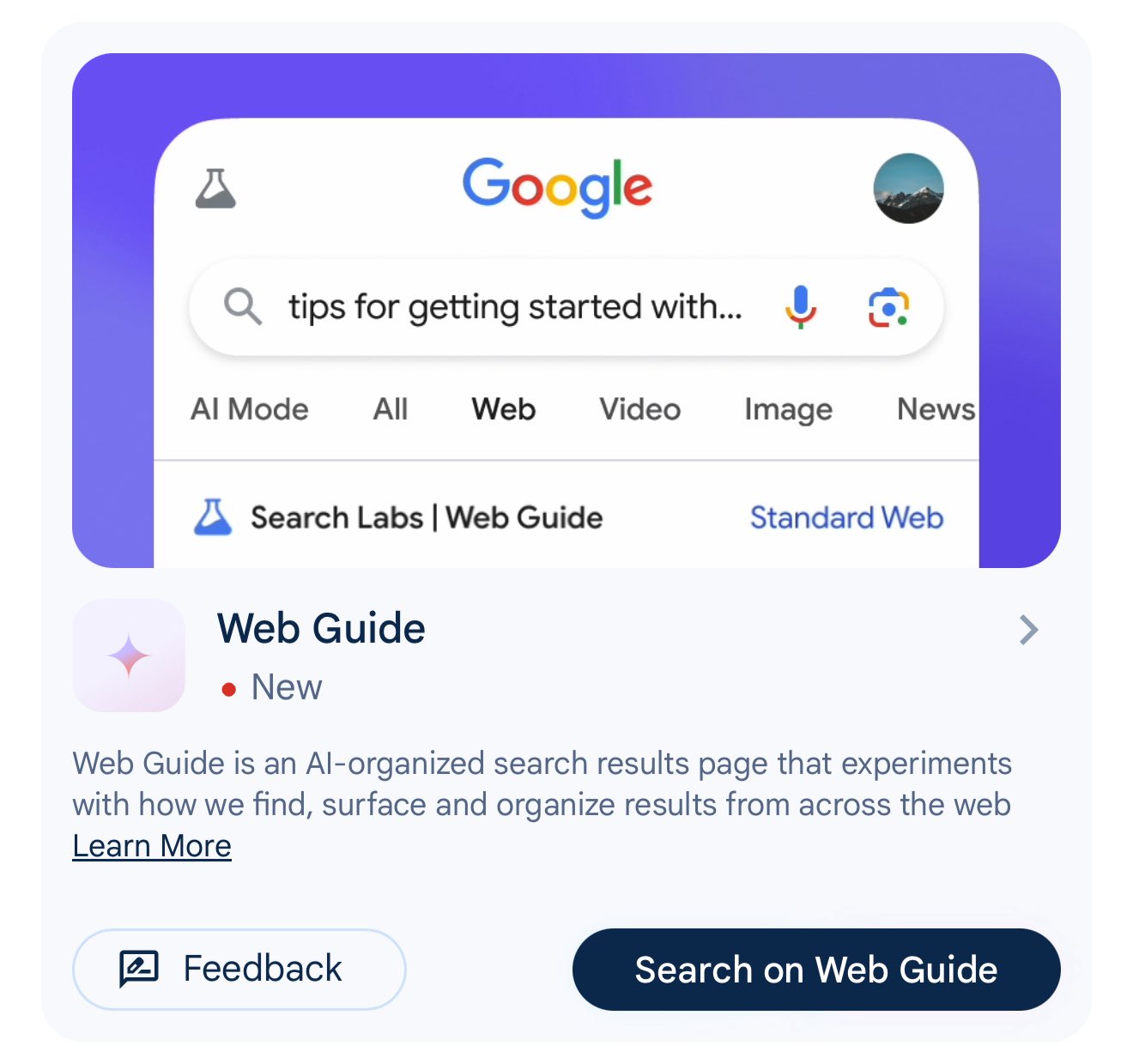
Search Labs is an important platform for Google to test future search possibilities. Users have full autonomy and are free to join interested functional experiments. These include “AI mode” to improve search efficiency, “Notebook LM” to assist learning, and creative tool “Flow” and even smaller projects to generate personalized audio programmes based on user Google Discover. The inclusion of the Web Guide would make the platform more functional.
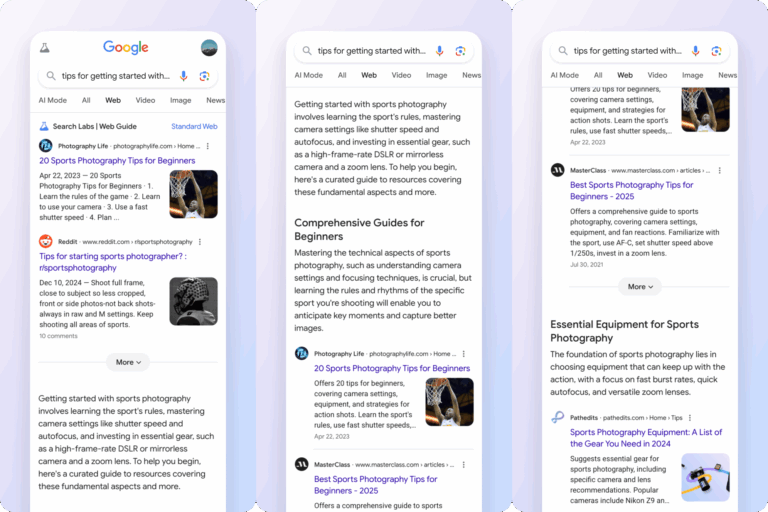
The core function of WebGuide will be to counter the fragmentation of information. In their daily search, users often face hundreds of web links requiring self-screening and classification of information. Web Guide will use the strong understanding of the customized Gemini model to perform in-depth semantic analysis of user queries and identify multiple dimensions or sub-themes implicit in the query.
Google indicated that this function was particularly appropriate for open search queries, such as “how to travel alone in Japan”, or even more complex multi-word queries. For example, you can ask the question: “My family is scattered across time zones. What are the best tools for maintaining contact and intimacy, despite the distance between them?”
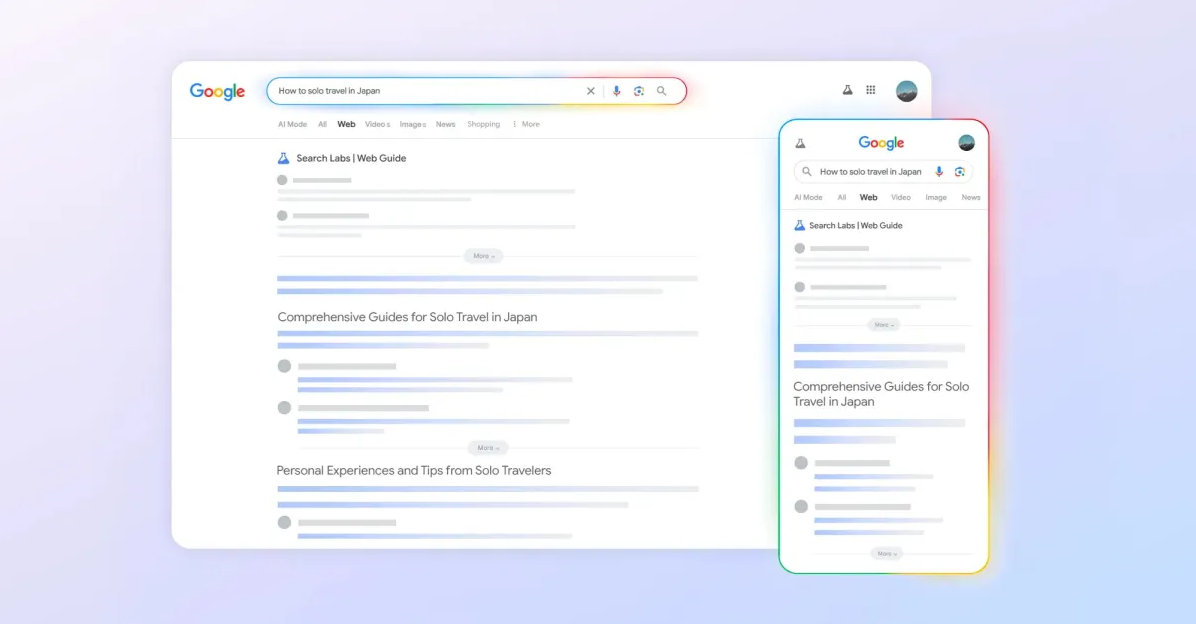
WebGuide core “Query Fan-Out” automatically generates and executes multiple highly relevant sub-searches based on an understanding of the main query. For example, in the case of “Japan Travels Alone”, it may trigger parallel inquiries such as “Japan Travel Safety Guide”, “Japan Travel Saves Money” etc. As in the case of a fishing net, it is possible to capture from the wider web-based oceans the small, valuable but high-quality web resources that traditional single search requests may omit.
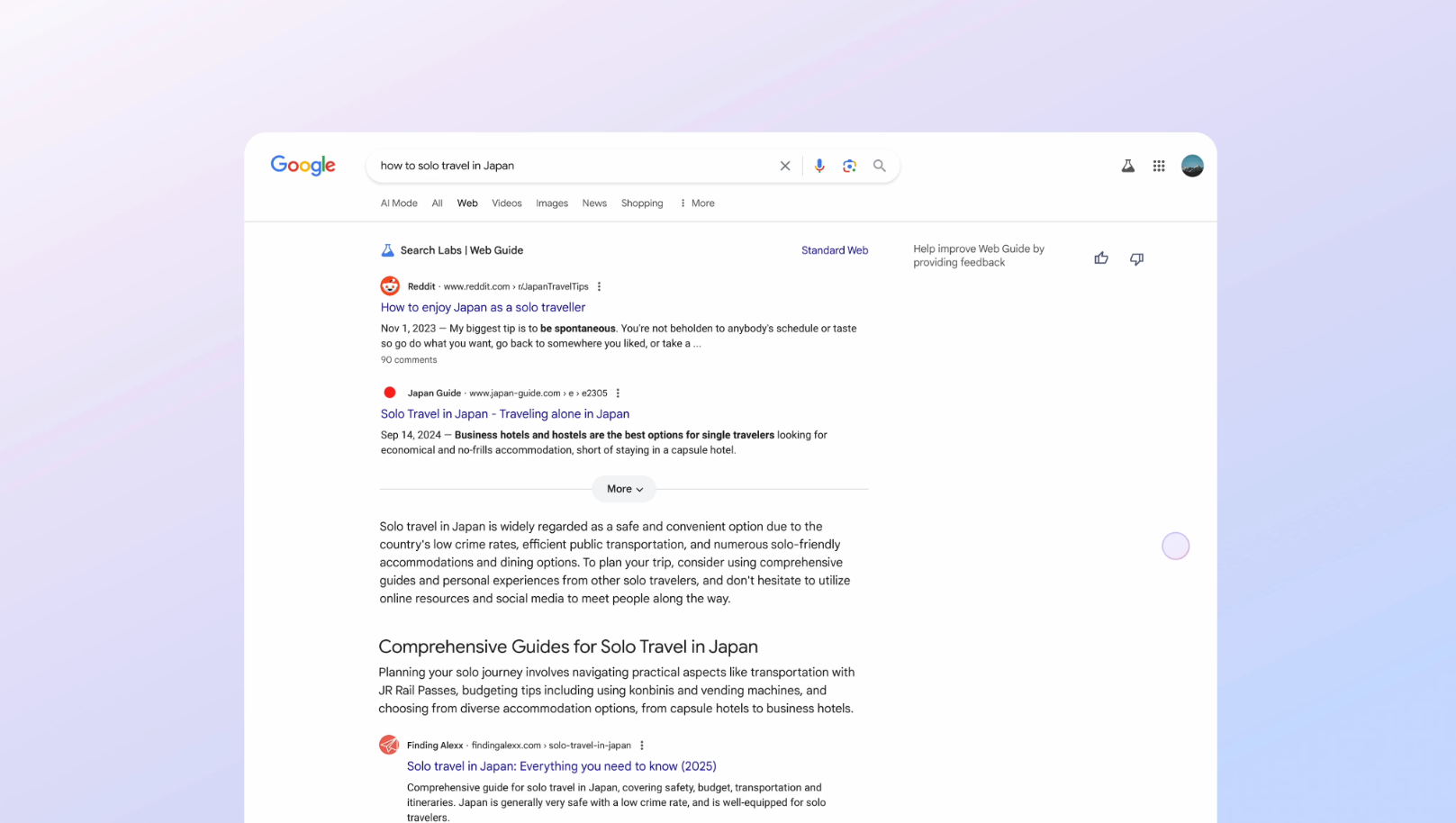
The end result is no longer a series of long list of links to users, but rather an “information map” that is clearly grouped by thematic dimensions. In the case of travel back to Japan, the search results page will be reorganized into logical blocks such as “Integrated Travel Planning”, “Security Care and Posters”, “Budget Management and Saving Money”, “True Traveller Experience Sharing”, and “APP and Tool Recommendations”. The most relevant web links under this theme are consolidated under each section. The cost of filtering users ‘ information has been significantly reduced to make the acquisition of knowledge more efficient and visible.
Google highlighted, in particular, the significant advantages of Web Guide in dealing with open inquiries and complex multi-word issues. However, the Web Guide is not Google’s first attempt at re-engineering an AI search. It shares the core technical concept of “Query Fan Out” with the already existing “AI Model” in Search Labs, which can be seen as a deepening and broadening of the concept in the specific direction of web-based insular organization. The two complement each other and together explore future search patterns.
Google has a long-term vision for the exploration of the Web Guide. Officially, it was made clear that this function would not be limited to the “webpage” tab page as the experiment progressed and the user feedback accumulated. In the future, other core areas to be searched will also be introduced, in particular the “integrated” results tab that users most frequently visit. The goal of Google is to identify, throughout the search process, the links that best serve the Web Guide value and help users “discover the network”, and the seamless integration of this intelligent information organization. This means that in the future, users may also encounter this well-articulated, subject-specific result in the default comprehensive search.
The birth of the Web Guide heralds the evolution of the search engine from passive “information searchers” to active “information organizers” and “knowledge navigators”. Its success in moving from a laboratory to a broader user base as a standard configuration for future search experiences will depend on its practical value and user acceptance in real-world testing.


Related Posts