Indeed, there is great concern that robots might eventually replace some human work. But at a robot-only sports game in China last weekend, the most worrying thing was that they fell or hit each other.
The three-day human robotics event ended last week in Beijing with more than 280 universities and private enterprise teams from 16 countries. Some of the robots have completed a back flip and have successfully crossed the barrier track and rugged terrain.
In other projects, however, robots ‘ mobility can only be said to be improved.
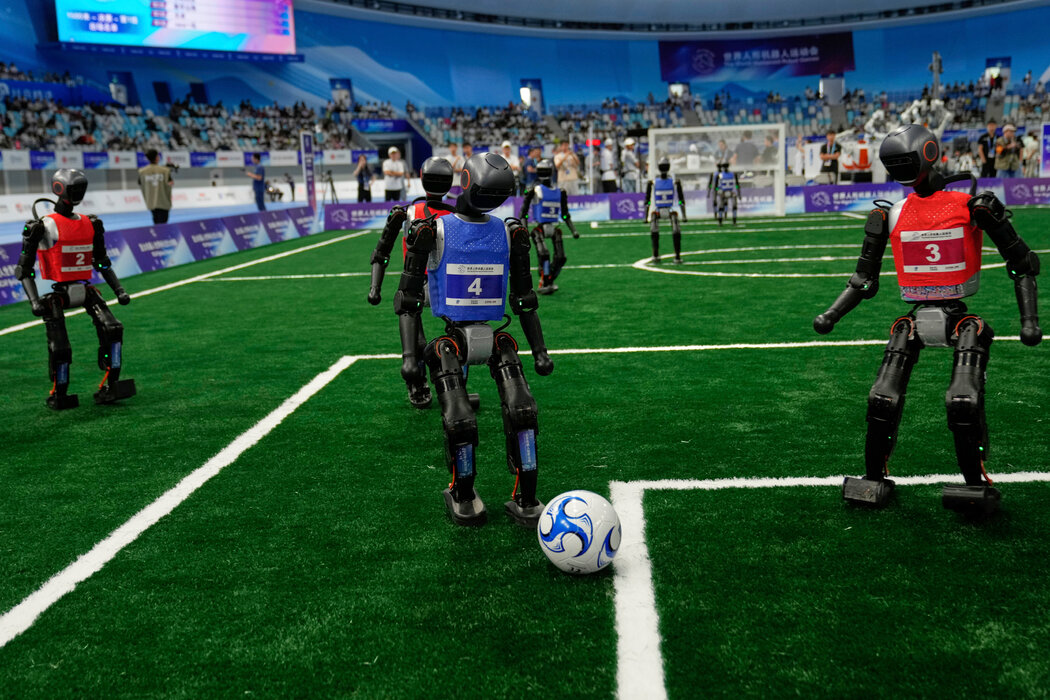
In football games, robots of the size of children trip over each other like dominoes. One of the goalie robots stood still, and his opponent kicked the ball into his leg several times and finally scored.
While the track project was sprinting, a Uyuki technology robot hit a staff member.
In the taekwondo competition, robots wearing colour gloves and helmets waved their fists but often failed.
“Untargeted,” according to the spokesman on the official live broadcast of the event, “often waved twice into the air”.
After a few minutes of punching and kicking, the referee declared one of the robots to have won. It held up its hands with gloves and waved in the air, and the audience gave a round of applause, while its opponent fell on the floor and seemed to be expressing its rejection.
This is the latest high-profile robot show in China. During the spring night, which hundreds of millions of people watched, human robots performed national dances. In April this year, the Beijing municipal government organized a half-way marathon, with 12,000 runners and 20 robotics.
Driven by government directives and huge investments, China is working to achieve a rapid breakthrough in the robotics sector. Artificial intelligence-driven robots have revolutionized China’s manufacturing industry, lowering operating costs and, in some cases, helping businesses to withstand the tariff effects of US President Trump.
This test revealed both limitations and possibilities.
“Despite the pitfalls, robots are making significant progress in moving and balancing, including back-to-back, side-to-side and other acrobatic and martial arts moves”, says Ken Goldberg, a robotics professor at the University of California in Berkeley.
A robot in Wootree Technologies won the gold medal of the 1,500-metre indoor track project at 6 minutes and 34 seconds. According to Professor Goldberg, this rate is impressive. Although much slower than the human record keeper of the project (Jacob Ingebrigsen, Norway, with a score of 3 minutes and 29 seconds 63), it has surpassed the level of many amateur human runners.
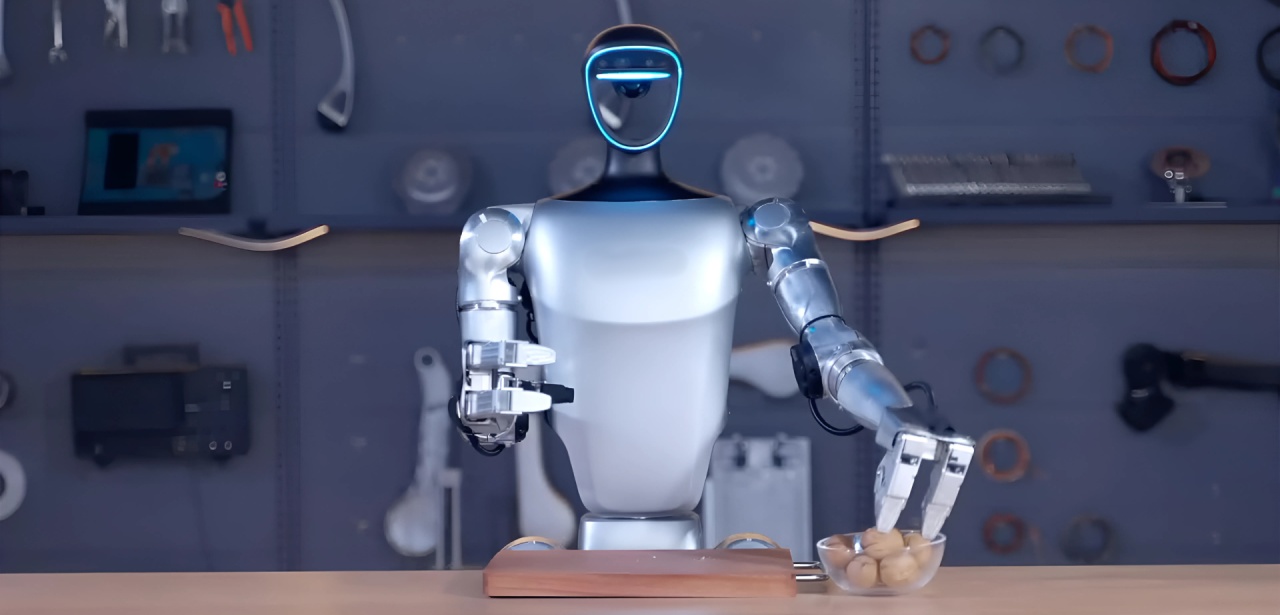
Some entrepreneurs believe that human robots will one day assume much of the physical work that is now being done by humans, including household, storage and factory work. For the time being, however, even a simple task, such as loading a dishwasher, would not be easy for them.
Alan Fane, a robotics professor at Oregon State University, said that human robotics could help “to give the public a real picture of the actual level of robotic technology”.
Professor Fane said that the competitions highlighted the rapid progress of the industry. First, human robotics are sufficiently sophisticated to be made, and researchers no longer need to spend as much as they did a year or two ago to buy robots or make them themselves.
Second, the advancement of artificial intelligence has enabled these machines to carry out broader basic tasks. Five years ago, he said, “none of the human robots that can stabilize walking, let alone run, jump or cope with rugged terrain”, he said.
However, Professor Fane also noted that robots such as those used in competitions usually do not have advanced functions such as planning or reasoning and often require the assistance of human operators to guide them.
“These robots are still clumsy,” he said.

Related Posts