
Google has now introduced an age-certification system at its Play shop, requiring users to confirm that they have reached the age of 18 before downloading specific applications. This is intended to protect minors from the effects of age limits, in line with the validation mechanisms used by platforms such as YouTube. With the introduction of new regulations, however, the economy of increasingly focused applications is facing multiple tests of privacy protection, user experience and compliance.
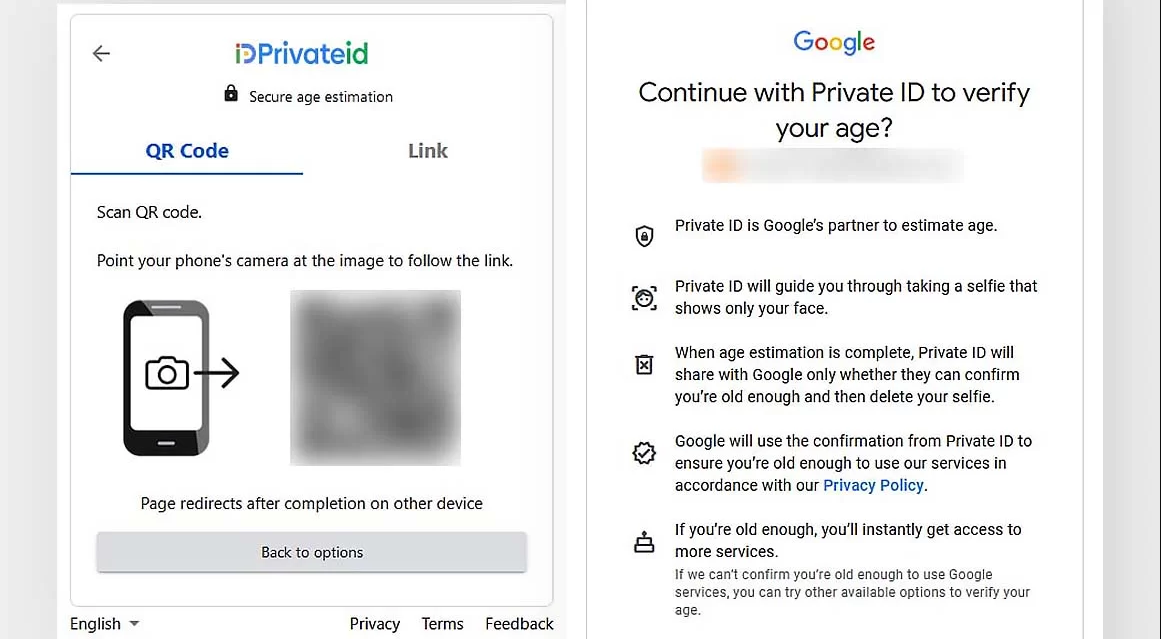
According to recent reports, for applications marked as mature content, the validation process requires the user to prove that he or she has reached the age of 18. Specific methods include uploading government-issued identity documents, binding credit cards and even performing facial recognition analysis through self-censorship. According to the Digital Trends report of 28 October 2024, such certification is becoming a standard of access for applications ranging from dating software to adult theme games. The system follows the age recognition tool available in Google (initially for the YouTube test). If the user’s account lacks validated age data, an attempt to install a restricted application triggers the authentication hint. Options include binding credit cards (validation of age through temporary pre-authorization without actual deductions) or uploading of identity documents. According to Android Association, more advanced AAA age estimation techniques are not yet fully available. According to industry sources, this responded to extensive regulatory pressure. The states of Texas, Utah and Louisiana have legislation requiring application shops to verify the age of users and obtain parental consent for minors. Google has incorporated such requirements into the policy system, as shown by Google Play Conservatories, which helped to update the documentation.
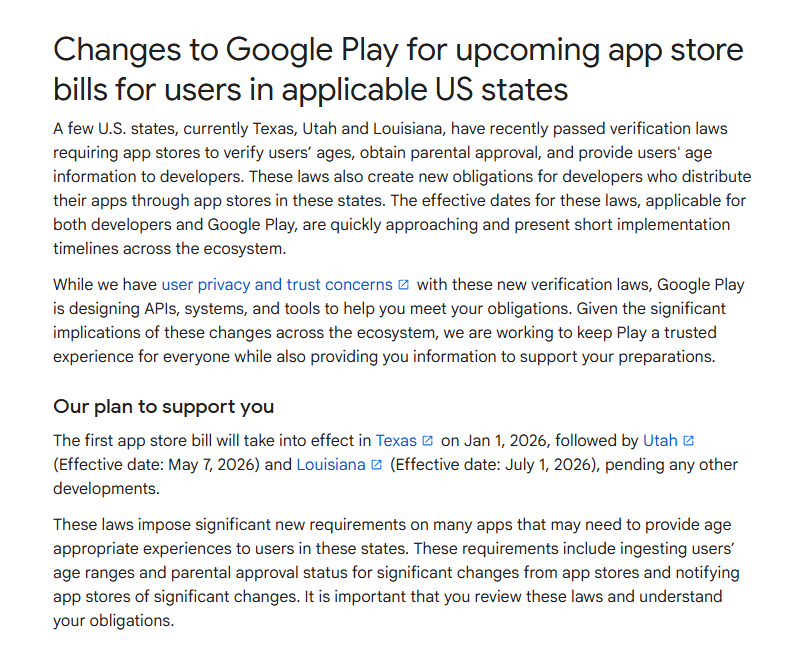
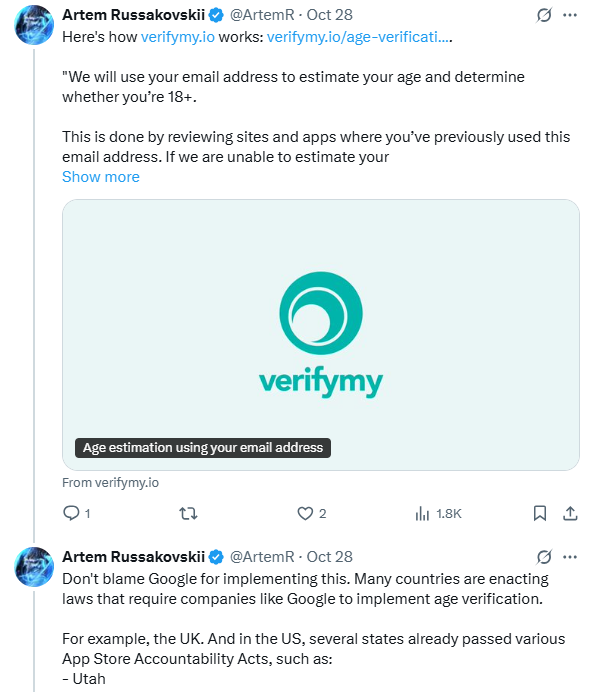
The impetus stems from a new wave of United States legislation on the safety of children online. For example, the new Texas law, which will come into force in January 2025, requires all users to verify their age before downloading content from the application store (regardless of content properties). According to Law.com, students have filed a complaint for violation of the right to the First Amendment. Google supported similar bills in California and other states — Governor Gavin Newsen signed a decree requiring the application store to assume responsibility for age certification. According to Bloomberg, this law, supported by Alphabet, transfers some of its responsibilities from individual applications to platforms. In Ohio, Meta and Google proposed a new competition that shows different thinking about age certification by the tech giant. Critics have noted that there are significant privacy risks associated with the collection of sensitive data, such as identity documents and self-censorship. The article entitled “Digital Trends” emphasizes: “Google calls the new system for the protection of minors, but it also raises new privacy concerns”. Platform users such as Reddit have expressed resistance to sharing personal information, and the r/PrivacyGuides section has even been explored by users to bypass authentication through VPN. Artem Russakovskii, the user of platform X, described the validation process in detail and warned about potential obstacles. While the Google Support page emphasizes data security and states that the uploading of documents is encrypted and not stored for long periods of time, public misgivings remain difficult to overcome in view of past data leaks in the technology industry.
For application developers, this means stricter content classification criteria. If the user refuses to verify, the download may decline. According to WebProNews, Google Play in September 2024 updated the already tight side-loading rules and enhanced application audits based on machine learning. Developers need to ensure that age-based guidance is used before they are exposed to downgrading risks. User experiences are uneven owing to legal differences: the European region is affected by the overlap of the General Data Protection Regulations and the compliance process is more complex. On 28 October 2024, when the function was declared on platform X, Android Police was given the “Google Play Shop now requires users to prove that they have reached the age of 18”. Google is exploring privacy protection certification programmes — such as zero-knowledge certification techniques. According to Ian Miers ‘ tweets of May 2025, the technology allows users to prove that they are 18 years of age or older through a signed digital licence without the need to divulge personal information such as name, birthday, etc. At the same time, AI age estimation techniques are being expanded. The face analysis system for Google testing automatically activates the restraint mechanism if it is monitored by users under the age of 18. In July 2025, Lifehacker reported that parental control might be automatically activated by the system, but its accuracy, particularly in the multi-ethnic group, remained in doubt.

This may set a precedent for competitors like Apple Store, who also face litigation and regulation. It is alleged that Meta supports the requirement of parental approval for downloading content for all minors, while Google prefers targeted testing. The balance between security and freedom remains unresolved as the app store evolves into a digitally mature gatekeeper. Industry analysts predict more legal disputes and freedom of expression advocates resist what they see as ultra vires regulation. Yahoo previously reported on the support of Meta and Google for different proposals, highlighting the fragmentation of the age-validation policy. Looking ahead, Google may extend these functions to other services by reference to the YouTube model. However, owing to differences in the definition of the age of majority and data laws across countries, the global user experience may be fragmented. For example, in part for national users requiring certification, it has been suggested in Reddit ‘ s discussions that restrictions be circumvented through VPN. Ultimately, this shift reflects the maturity of the digital ecosystem — access is becoming more and more conditional. As stated in Mobile Marketing Reading on platform X on 28 October 2024: “Google is introducing age validation at Play Shop, requiring users to prove that they are 18 years of age or older before the next specific application. ” Their long-term impact on innovation, user trust and regulatory synergies remains to be seen.


Related Posts